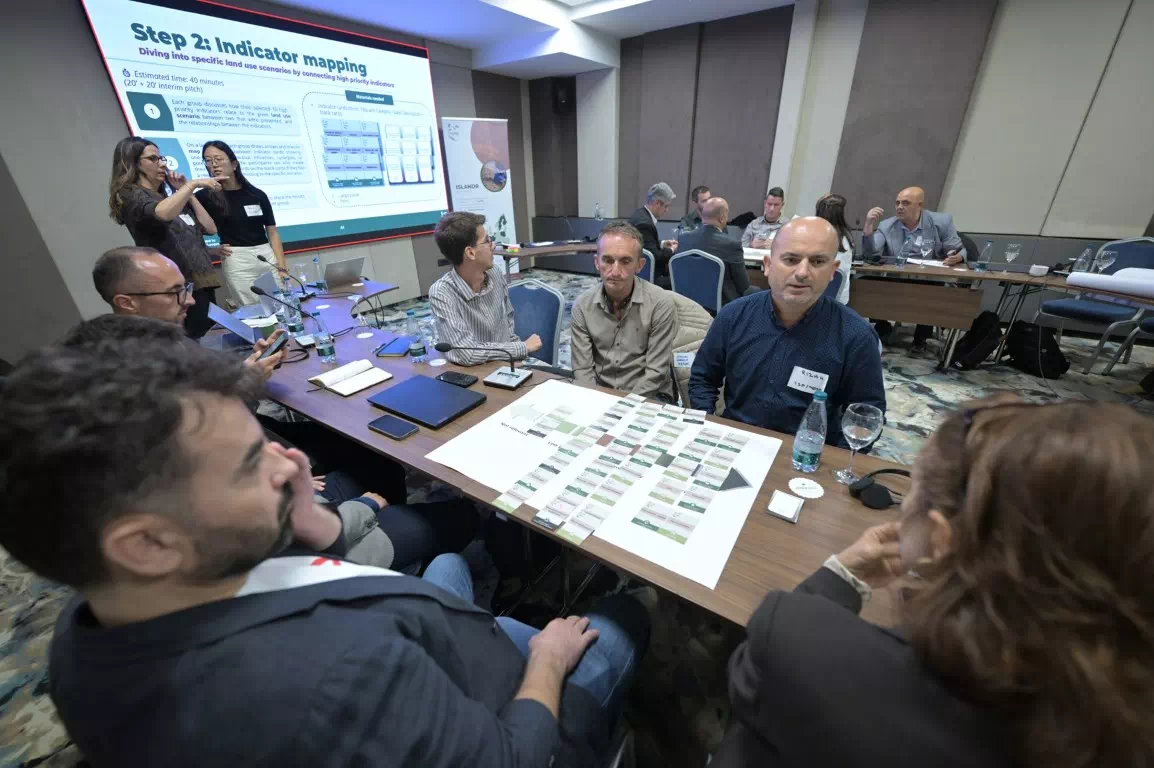

We interviewed Marie Veys and Dain Jung from LGI Sustainable Innovation, who recently facilitated gamified workshops on wider values in Kosovo and Soesterberg. Using tools such as indicator cards and tokens to spark discussions on topics ranging from environmental protection and economic opportunities to community well-being and future land use, they shared how these sessions help break down barriers in stakeholder engagement.
This article explores how the ISLANDR wider values gamified workshops support dialogue around complex planning challenges and help stakeholders move towards a more collaborative and shared vision for the future of contaminated land redevelopment.
What are the ITA Wider Values Focus Groups?
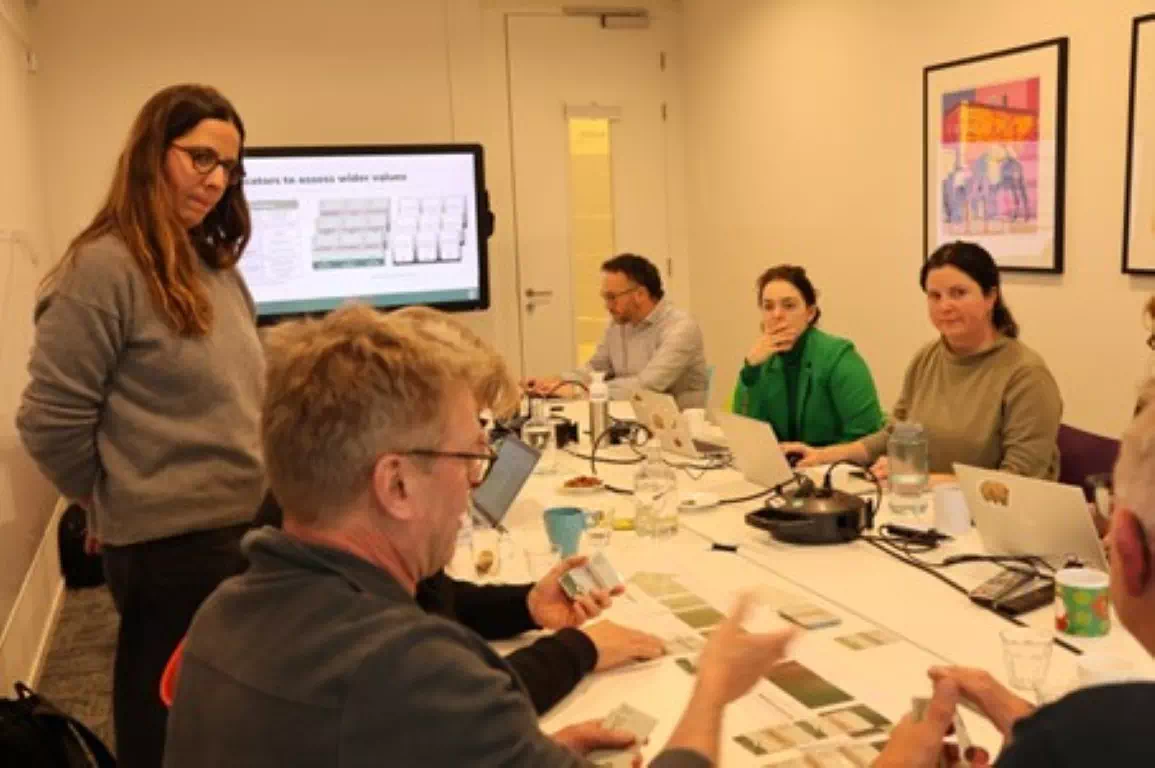
The ITA Focus Groups are small, hands-on workshops designed and facilitated by LGI Sustainable Innovation within the ISLANDR project to explicitly explore wider values associated with contaminated land remediation and redevelopment in the ISLANDR Test Areas (ITAs). The workshops bring together stakeholders who shape, influence or directly affected by land use decisions, include actors from government, spatial planning, remediation, local development, and organisations operating on or near the site. Each session creates space for participants to explore how wider economic, social and environmental values influence redevelopment projects through the lens of sustainable and risk-based land management and spatial planning strategies. The gamified workshop combines indicator prioritisation, value-oriented discussion, and future vision creation to support the reflection on the impacts of such strategies and to make visible wider values that are often not captured in technical planning processes or financial statements of redevelopment projects.
Why are they important?
These sessions matter because land remediation and redevelopment rarely hinge on technical facts alone. Decisions are shaped by a combination of uncertainty, political context, values, stakeholders' interests, timelines, or heritage and identity of the land, all of which are unique to each site. The gamified workshop makes those conversations possible in a structured yet approachable way. They help regions understand what sustainable risk-based land management looks like in practice and how collaboration between the stakeholders and consideration of wider values such as health and well-being, education, job creation or community values that are rarely accounted for in financial statements can support better outcomes.
How do different contexts shape the Focus Groups?
While the structure of the Wider Values Focus Groups remains consistent, the way each session unfolds is adapted to the context in which we focus on. The methodology and the presented spatial planning strategies are designed to be flexible, allowing the same core steps to respond to different institutional settings, stakeholder constellations, and levels of planning maturity. So far, the approach has been applied in three very different Integrated Territorial Areas: Kolleberga (Sweden), Soesterberg (the Netherlands), and the area near Pristina (Kosovo). Each context revealed distinct needs, constraints and priorities, which in turn influenced how the Focus Groups were conducted and what types of discussions emerged. Theses contrasts underline why engaging local actors is essential.
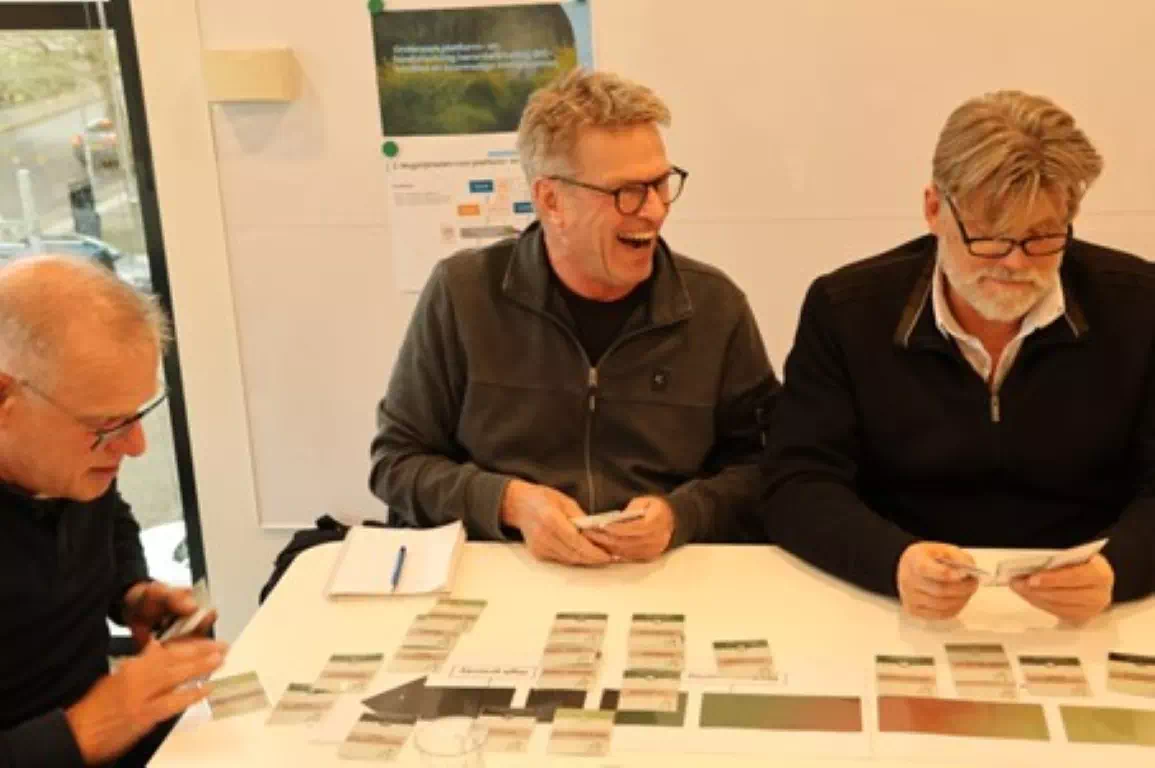
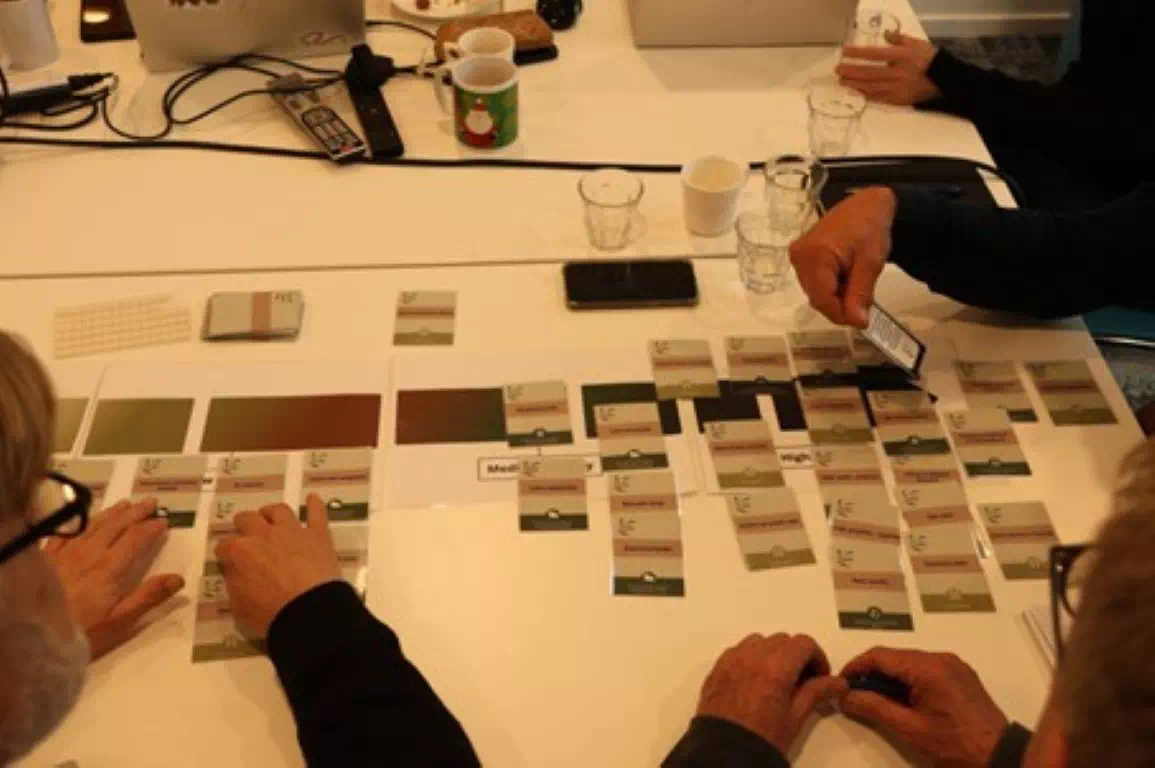
Each workshop follows a shared backbone: introducing sustainable and risk-based land management, exploring wider values through a structured gamified workshop using indicator cards and tokens, and linking these values to spatial planning strategies. What changes is how the tools are framed and emphasised. Token sets are adjusted to reflect local concerns and the facilitation and the discussion shift depending on whether stakeholders are at an early visioning stage or already engaged in active redevelopment. This adaptability ensures the conversation feels relevant and concrete, rather than generic.
The gamified workshop plays a key role in this adaptability. By moving from individual prioritisation to collective mapping and future visioning, participants bring their own realities into the process. In some contexts, the workshop helps surface governance gaps or conflicting mandates; in others, it opens space to discuss uncertainty, long term risk, or opportunities that not yet visible in formal plans. The same mechanics lead to different outcomes because they are shaped by the values, knowledge, and constraints that participants bring into the room.
In this way, the Focus Groups avoid a one-size-fits-all approach. They provide a structured yet open framework that adapts to each ITA, enabling stakeholders to work with shared tools while arriving at insights that reflect their specific challenges and ambitions.
What are the expected outcomes ?
The goal of the Wider Values Focus Groups is not to deliver a finished redevelopment plan. Instead, they help regions build the clarity and shared understanding needed to create their own pathways by exploring wider values and envisioning the future of their land. The outcomes also aim to support building investment cases and to understand better the unique priorities for each ITA. Through the sessions, participants surface local priorities, map wider values, explore spatial planning options, and reflect on how different strategies may support or limit investment opportunities. They also strengthen collaboration and open space for creative thinking rather than locking discussions into a single predefined solution.
Beyond the workshops themselves, the methodology is designed to be transferable. The ISLANDR team plans to further test and refine the wider values gamified workshop with students as part of capacity building and education activities. All Focus Group materials related to wider values will be made openly available on the ISLANDR website, allowing others to adapt and apply the approach in different contexts.