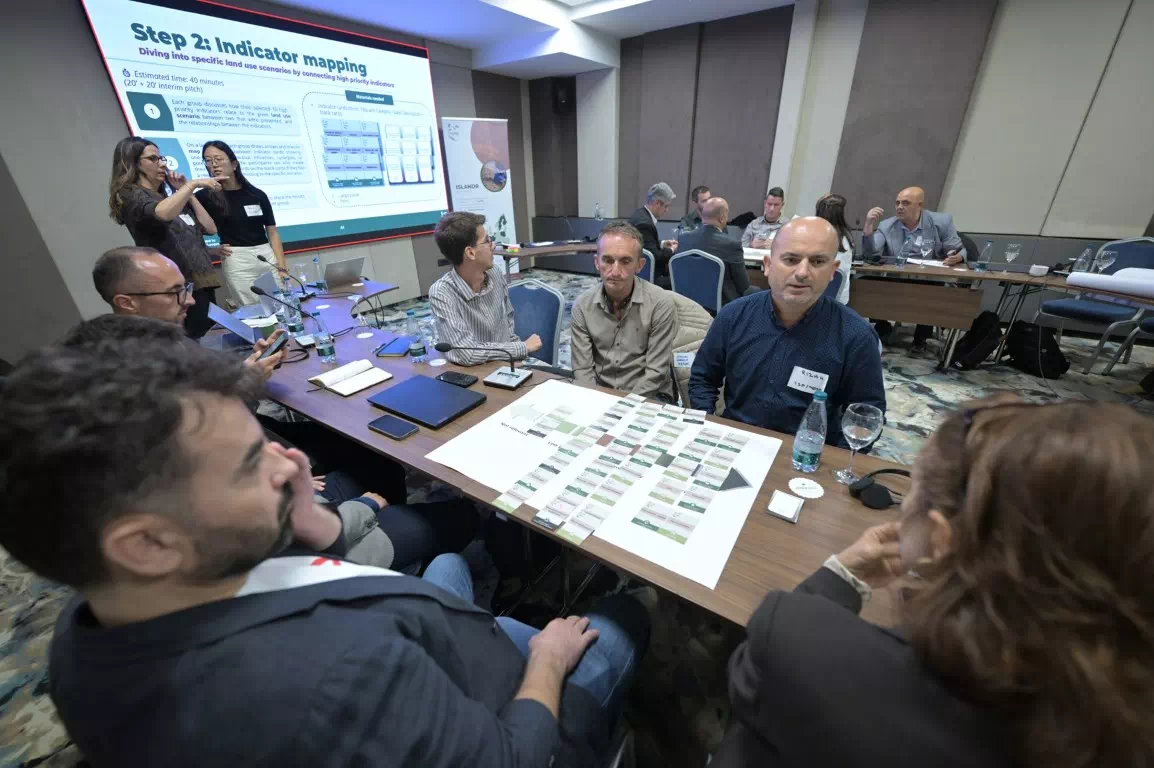
After three years of research across seven European test areas, the Horizon Europe project ISLANDR (Information-based Strategies for Land Remediation) has published its final suite of tools and methods which aim to support policymakers, regulators, and site managers tackle soil contamination more effectively, especially where remediation costs have previously been a barrier.
With an estimated 2.8 million potentially contaminated sites across the EU, soil pollution remains one of the continent's most pressing environmental challenges. ISLANDR was designed to support the EU Mission: A Soil Deal for Europe by making remediation feasible even in situations where the business case is economically marginal or negative.
Tangible results
The project's key outputs include:
- Layman’s Report
- Metadata catalogue
- ISLANDR Roadmap
- Risk-based S-P-R conceptual models
- IISDIA algorithm
- Methodology for large scale risk assessment
- Operating windows-based input to an online Decision Support Tool (DST)for remedy selection
- Circularity assessment methodology of remediation technologies
- Spatial Planning Strategies
- Tool to support the selection of relevant Contaminant of Emerging Concern (CEC)
- Updated description of sustainable and risk-based land management
- Updated SRBLM option appraisal tool
”As the ISLANDR project comes to an end, we can look back with pride on what we have achieved together. ISLANDR has not only met its ambitious objectives but has also fostered strong connections across institutions, disciplines, and countries, leaving a lasting mark on soil remediation and sustainable land management practices throughout Europe. The real strength of ISLANDR has been the collaboration between partners from diverse sectors, areas of expertise, and geographical contexts. By bringing together knowledge in land remediation, risk assessment, spatial planning, and sustainable land management, we have developed valuable tools and approaches that support more informed land-use decisions. Beyond the technical results, the project has built a network of cooperation and shared learning that will continue to generate benefits long after its conclusion. I am confident that the outcomes of ISLANDR provide a lasting foundation for more sustainable, resilient, and future-oriented land management across Europe.”
Nike Luodes, ISLANDR Project Coordinator Geological Survey of Finland (GTK)
What's next
All ISLANDR tools and methodologies are publicly available through the project's website. Follow the work of related projects that work closely on the topic of restoring polluted soils in Europe, such as EDAPHOS, ARAGORN, and the ALL4BIOREM Cluster.
About the project
The Information-based Strategies for Land Remediation, in short ISLANDR, was a multidisciplinary project, which aimed at supporting the execution of the EU mission: A Soil Deal for Europe.
ISLANDR brought a dedicated focus to low input remediation through 7 test areas, including sites impacted by the green transition, such as former mining areas. This aimed to ensure that soil remediation will be facilitated even when the cost of remediation is economically marginal or may even be negative.
ENDS
Contact: comm@lgi.earth